
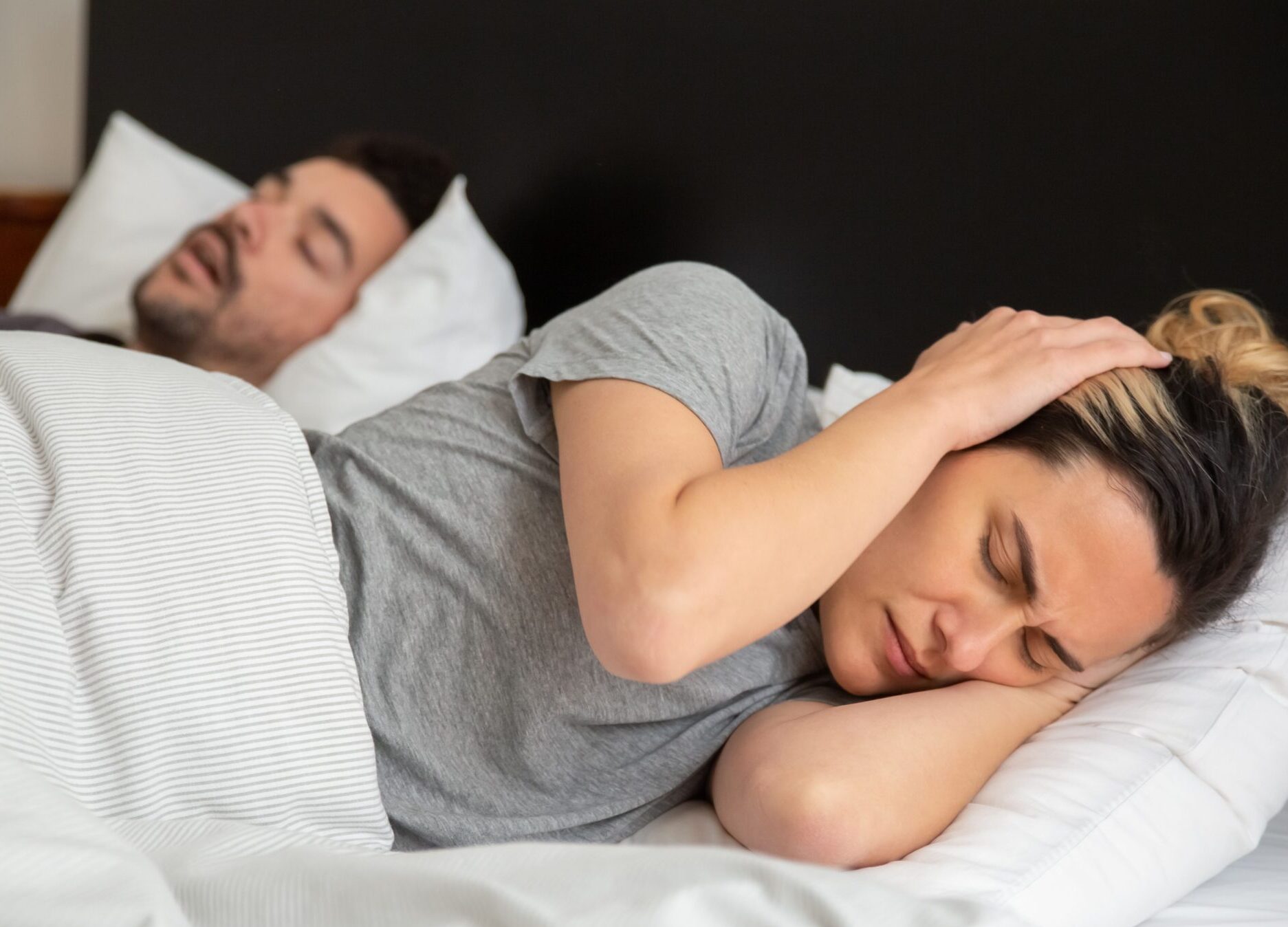
Snoring is common, and occasional snoring does not necessarily mean something is wrong.
But when snoring is loud, frequent, or accompanied by other symptoms, it may be more than an annoyance. It can sometimes be a sign of obstructive sleep apnea, a condition in which the airway repeatedly becomes blocked or narrowed during sleep.
What Is the Connection Between Snoring and Sleep Apnea?
Snoring happens when air moves through a narrowed upper airway and causes the surrounding tissues to vibrate.
With obstructive sleep apnea, the airway can become narrow enough that airflow is significantly reduced or temporarily blocked. With obstructive sleep apnea, these partial or full blockages can happen hundreds of time per night. Your brain briefly wakes you up just enough to reopen the airway, but not enough for you to remember it. This combination of airway blockages and fragmented sleep places a heavy burden on your entire body, preventing you from getting restful sleep, and of course causes snoring.
What Does Sleep Apnea Snoring Sound Like?
There is no single sound that proves someone has sleep apnea.
However, loud snoring accompanied by pauses in breathing, followed by gasping, choking, or snorting, can be a warning sign.
A bed partner may notice these patterns before the person experiencing them realizes anything is happening.
What Other Symptoms Should You Watch For?
Snoring becomes more concerning when it occurs alongside symptoms such as:
- Pauses in breathing during sleep
- Gasping or choking during the night
- Excessive daytime sleepiness
- Morning headaches
- Waking with a dry mouth
- Difficulty concentrating
- Irritability or mood changes
- Waking frequently during the night
- Feeling tired despite getting enough sleep
These are just a few of the many symptoms that can present with sleep apnea. It’s also important to remember that not everyone with sleep apnea snores loudly, and not everyone who snores has sleep apnea.
That is why looking at the entire pattern, along with your oral anatomy, is important.
Can You Have Sleep Apnea Without Snoring?
Yes. Although snoring is a common symptom of obstructive sleep apnea, it is not required, and as we mentioned already, it’s only one of many possible symptoms.
Some people may have other symptoms, such as daytime fatigue, morning headaches, or witnessed pauses in breathing.
If someone notices that you stop breathing during sleep, it is worth discussing the finding with your primary care provider and your dentist, even if you don’t consider yourself a loud snorer.
Why Should Sleep Apnea Be Taken Seriously?
Untreated sleep apnea can interfere with sleep quality and is associated with a number of serious health concerns, such as heart disease, diabetes, dementia, hypertension, anxiety, depression, obesity and more.
Many people live with sleep apnea for years without realizing it because the interruptions happen while they are asleep. We know now that so many common health conditions are also linked to obstructive sleep apnea.
If your partner tells you that you stop breathing at night, or you regularly wake up gasping or feeling exhausted, do not simply assume that it is normal.
What Should You Do If You Think You Have Sleep Apnea?
The first step is evaluation.
A dentist that is trained in dental sleep medicine like Dr. Kakaris and Dr. Kakaris Porter, or your primary care provider, can help determine whether your symptoms are consistent with sleep apnea and whether sleep testing is appropriate.
If necessary, we’ll provide a convenient home sleep test that allows you to sleep in your own bed while gathering important diagnostic information.
Once a diagnosis is established, we can determine the best treatment to treat your sleep apnea.
The Bottom Line
Snoring does not automatically mean you have sleep apnea. But loud, persistent snoring combined with pauses in breathing, gasping, daytime sleepiness, or other symptoms should not be ignored.
Sometimes the person who needs to recognize the warning signs is not the person sleeping. It may be the partner lying next to them.
If someone has noticed that you stop breathing during sleep, take it seriously. Sleep breathing disorders such as sleep apnea affect your energy, your health, and your quality of life, and effective treatment is usually simpler than you think.
If you’re wondering whether your snoring is a sign of a more serious underlying issue like sleep apnea, schedule a consultation with Dr. Kakaris or Dr. Kakaris Porter at Kakaris Family Dentistry.
We’ll help determine the cause of your snoring, help you find the right solution for your needs and guide you through the process—from evaluation to home sleep testing, custom appliance fabrication, and restful nights ahead.