
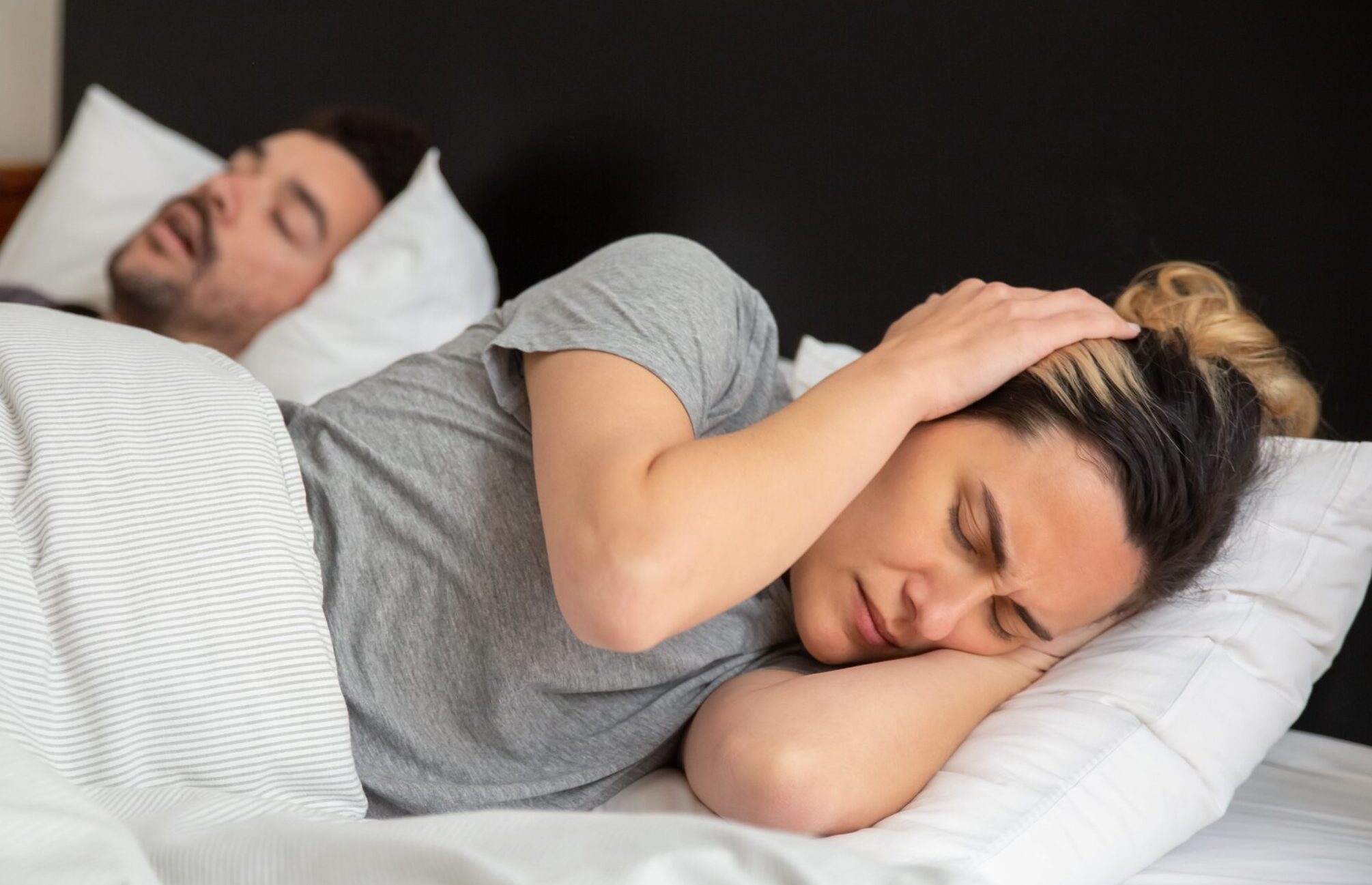
Snoring is often treated as a harmless annoyance. Your partner complains, you laugh about it, and everyone moves on. Other times it’s a perpetual problem in your relationship. Health risks aside, snoring often forces some couples to sleep in separate bedrooms in order to get restful sleep.
Whether you’re the snorer, or the desperate partner hoping for some peace and quiet, we’ll discuss some ways you can address loud snoring.
Persistent snoring can sometimes tell you something important about how you are breathing while you sleep.
If you are wondering how to stop snoring, the first step is understanding why you are snoring in the first place.
What Causes Snoring?
Snoring occurs when airflow through the upper airway becomes restricted during sleep.
As you sleep, the muscles in your throat relax. In some people, the relaxed tissues narrow the airway. As air moves through the narrowed space, the surrounding tissues can vibrate, creating the sound we recognize as snoring.
Several things can contribute to this, including:
- Sleeping on your back
- Nasal congestion
- Alcohol consumption before bed
- Excess weight
- Certain medications
- Anatomy of the nose, mouth, or throat
- Enlarged tonsils or other airway structures
- Sleep apnea
This is why the solution that works for one person may not work for another.
Can Changing Your Sleeping Position Help with Snoring?
For some people, yes.
Snoring can be worse when sleeping on your back because gravity can allow the tongue and soft tissues to move toward the back of the throat.
Sleeping on your side may help keep the airway more open. What we have found is that sleeping in one position all night long is unattainable for most, because the body will move where it is most comfortable, and because you’re unconsciously asleep, there is nothing you can do to prevent this normally. Most people who take our at home sleep test are surprised to see just how much they move around and change sleep position throughout the night.
If you suspect sleeping on your back may be contributing to your snoring, you can try a specialized wearable pillow that helps to prevent you from sleeping on your bag.
It is not a guaranteed solution, but it is a simple change worth trying if you tend to snore more when sleeping on your back.
Can a Deviated Septum Cause Snoring?
A deviated septum can contribute to snoring if it is severe enough. An easy way to identify if your septum is contributing to your snoring is to try products such as nasal strips or nasal dialators.
Nasal strips work by pulling and lifting the sides of your nose outward to create more breathing room. Some patients with deviated septums report moderate snoring relief when using these strips.
A nasal dialator is different in that it is a small plastic piece that you insert into your nose and wear at night. The piece physically holds the nostrils open, and some patients with deviated septums have also reported some relief with these devices as well.
Can Alcohol Make Snoring Worse?
It can.
Alcohol relaxes the muscles in the upper airway, which can make airway narrowing more likely during sleep.
If you notice that your snoring is particularly loud after drinking, that may be part of the reason.
Is Snoring Always Harmless?
No.
Occasional snoring does not necessarily mean there is a serious problem. However, loud, frequent snoring can sometimes be associated with obstructive sleep apnea.
Pay attention to other symptoms, especially:
- Pauses in breathing during sleep
- Gasping or choking during the night
- Excessive daytime sleepiness
- Morning headaches
- Difficulty concentrating
- Waking with a dry mouth
- Feeling tired even after getting enough hours of sleep
If these symptoms sound familiar, it is worth discussing them with a healthcare professional.
Can You Stop Snoring Without Surgery?
When is comes to figuring out how to stop snoring, the important point to remember is that snoring is a symptom, not a diagnosis. Finding out what is contributing to it can make it easier to determine what approach is appropriate.
Depending on the cause, there are several approaches that may help reduce snoring, and most do not require any surgery.
Lifestyle changes, addressing nasal congestion, changing sleep position, and maintaining a healthy weight may help some people.
For others, the underlying issue may require a more specific evaluation, namely to evaluate your oral anatomy and airway, discuss any symptoms, and if necessary, complete a home sleep study to determine if there are underlying sleep breathing disorders causing your snoring.
When Should You Be Evaluated for Sleep Apnea?
There are many signs that you should consider getting evaluated for sleep apnea. The most significant signs are the way that you feel. If you aren’t waking up feeling refreshed after a full night’s sleep, if you feel excessively tired throughout the day, if you wake up several times throughout the night, you may seriously consider getting evaluated for obstructive sleep apnea.
Additionally, if someone notices that you stop breathing during sleep, or you wake up gasping, do not simply assume that you are “just a snorer.”
Sleep apnea can affect sleep quality and overall health, and many people do not realize they have it.
A proper evaluation can help determine whether you have obstructive sleep apnea or sleep-disordered breathing, and what options may be appropriate.
The Bottom Line
If you want to stop snoring, start by figuring out what may be causing it.
Simple changes such as sleeping on your side or addressing nasal congestion may help some people. But persistent, loud snoring, particularly when combined with pauses in breathing or daytime fatigue, deserves a closer look.
Sometimes the most important question is not simply “How do I stop snoring?” but “Why am I snoring in the first place?”
If you’re ready to address your snoring and daytime tiredness with the experts, call us to schedule a no-pressure consultation with us. Dr. Kakaris and Dr. Kakaris have over 50 years of combined experience serving the Downriver Michigan community and are here to help you stop snoring and start getting the sleep you deserve.
Links on this page may include affiliate links for products approved by and recommended by our doctors. We never promote items we do not truly believe in.