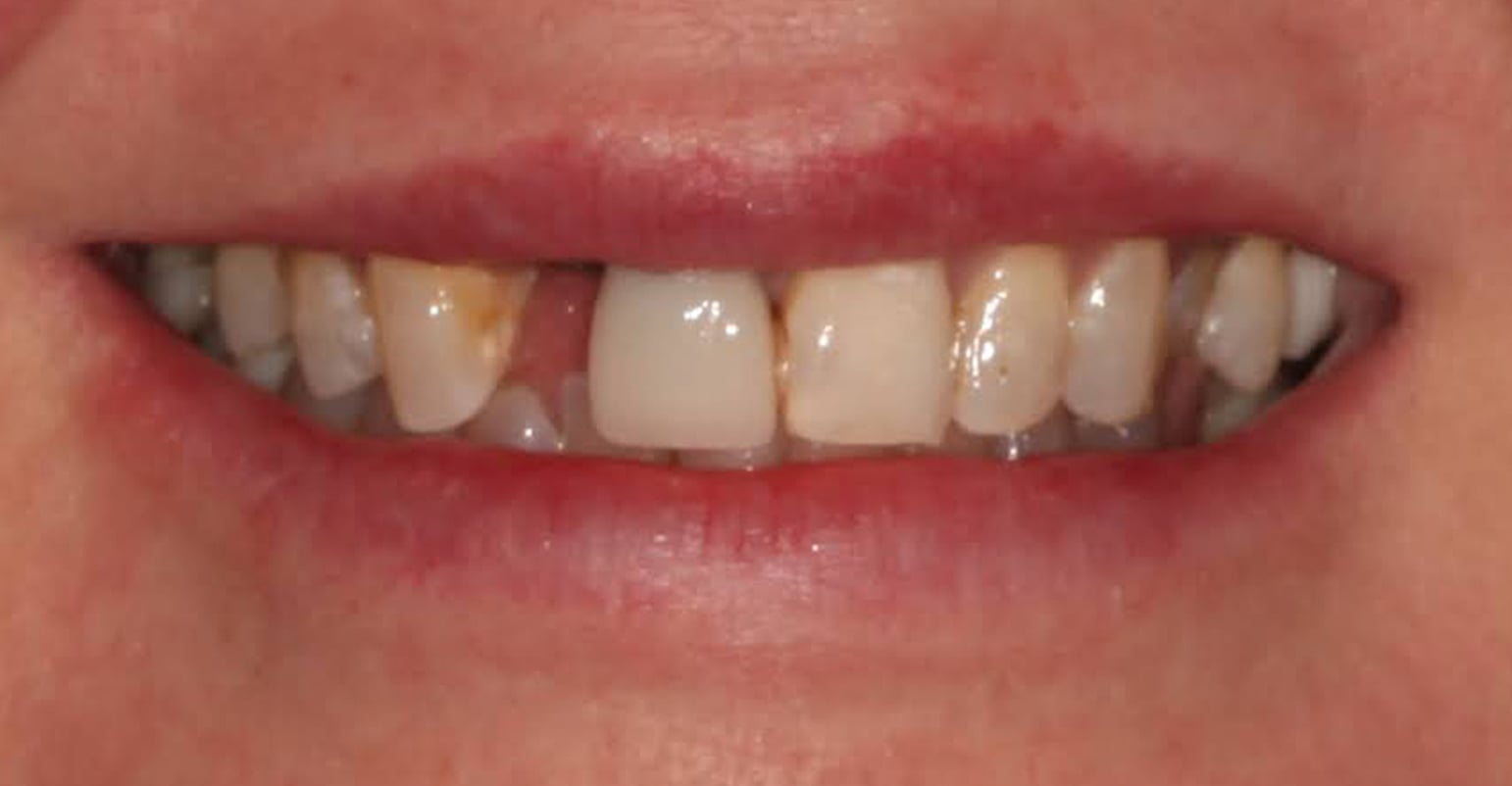
If you’ve lost a tooth, you may have already heard several different recommendations. Whether it was recommended by me (Dr. Arestea Kakaris), or another dentist, generally the options are the same.
Get an implant.
Get a bridge.
Get a partial denture.
Or maybe you’ve been told you don’t necessarily need to replace it at all.
So which option is actually best?
The honest answer is that there isn’t one replacement option that is right for everyone. The best choice depends on where the tooth was lost, the condition of the surrounding teeth and gums, the amount of available bone, your bite, your overall oral health, and what you want from your treatment.
At Kakaris Family Dentistry, we believe the goal isn’t to recommend the most advanced treatment simply because it is available. The truth is that what’s right for one of my patients would not always work for another, simply based on things like their medical history, personal preferences, anatomy, or any other scenarios. So the goal in our practice is to determine what makes sense for your particular situation.
Your Main Options for Replacing a Missing Tooth
Dental Implants
A dental implant replaces the root portion of a missing tooth and can support a crown that replaces the visible portion.
For a while now, dental implants have been a hot topic. I’ve been placing dental implants for around 20 years, and it seems like now more than ever people are asking for them. But they aren’t for everyone, and I don’t recommend dental implants for everyone. I recommend them on a case-by-case basis.
One of the major advantages is that the neighboring teeth do not have to be used to support the replacement tooth.
Implants can also help maintain the bone in the area where the tooth was lost. For patients who are good candidates for a dental implant (or multiple implants) they really are an all-around great option to replace missing teeth.
Dental Bridges
A bridge replaces a missing tooth by using neighboring teeth for support. They can also be a good way to replace multiple missing teeth in an area with one fixed prosthetic.
For some patients, a bridge can be an excellent option, particularly when the adjacent teeth already need crowns or substantial restorations.
A bridge can also provide a faster treatment timeline than an implant in many situations, since we don’t have to wait for the implant site to heal, or for the implant to integrate with your jaw bone.
Removable Partial Dentures
A partial denture can replace one or several missing teeth and can be a practical option depending on the number and location of missing teeth, your oral health, and your preferences.
It is removable, which is an advantage for some patients and a disadvantage for others. I do find that some patients tend not to use their lower partial dentures, so it’s important to consider whether you will actually use it before choosing this treatment option… Because it won’t do you any good sitting in a drawer!
Leaving the Space Alone
This is the option people sometimes don’t expect us to discuss, but not every missing tooth automatically means you need an implant.
However, leaving a tooth missing can allow surrounding teeth to shift, affect your bite, contribute to changes in chewing patterns, and lead to bone loss in the area.
Whether leaving the space alone is reasonable depends heavily on which tooth is missing and your individual circumstances.
What We Look At Before Recommending Anything
Replacing a tooth isn’t simply a matter of looking at the empty space.
We want to understand the entire environment around it.
That may include:
- The health of the neighboring teeth
- The condition of your gums
- The amount and quality of available bone
- Your bite
- Whether you grind or clench
- How long the tooth has been missing
- Whether there is an infection
- Your overall dental health
- Your goals for appearance and function
And for patients who are considering dental implants, we always use 3D CBCT imaging so we can determine whether you are a good candidate for implants.
So Which Option Is Best?
Dr. Kakaris Porter and I share the same philosophy: the best treatment plan is the one that is fully customized to the patient’s needs. And what that means is that dentistry is not a “one-size-fits-all” industry.
So the best option is the one that works for your specific situation.
Sometimes the answer is an implant.
Sometimes it’s a bridge.
Sometimes a removable option makes more sense.
And sometimes the most appropriate first step is simply to monitor the area.
The important thing is understanding why a particular treatment is being recommended. We like taking our time with you to fully discuss your options, desires and expectations so you understand our recommendations.
The Bottom Line — Dr. Kakaris's Take
I don’t believe there is one “best way” to replace a missing tooth.
A good treatment plan should take into account not only what can be done, but what should be done, when it should be done, and what makes sense for you over the long term.
And the most important thing to remember is, if you’re missing a tooth, don’t feel like you have to walk into an appointment already knowing which treatment you want! It’s our job to discuss your goals and inform you of all your options.
Cheers,
Dr. Arestea Kakaris, DDS

Dr. Arestea Kakaris has served the Downriver Michigan community with trustworthy care for over 45 years. She is committed to providing honest recommendations and advanced treatment for your dental health.
Whether you’re just starting to explore your options or you want an honest second opinion from dentists that have your best interest in mind, Dr. Arestea Kakaris and Dr. Alexander Kakaris Porter are ready when you are.
Call today to schedule your consultation (734) 676-1656.